St Michael’s Chapel
The Thursday Murder ClubSt Michael’s Chapel links Matthew Mackie’s past to the present act of telling it: once a place where he worked and hoped to find Maggie safe, it becomes the setting for his confession to Elizabeth and for his account of finding Maggie dead. Its candlelit interior, altar, and beam give physical form to the distance between the reassurance he sought and the loss he had to face.
Setting and Earlier Connections
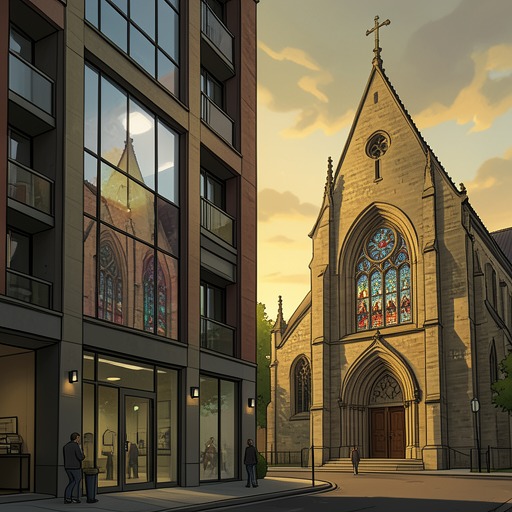
Mackie had worked at St Michael’s Chapel for a time, though Elizabeth did not know this when he told her. The chapel was part of a larger convent setting: an office he used lay just behind it, while the convent included dormitories and an infirmary. The distinction matters in his recollection. He could imagine going to the office for papers as an ordinary explanation for being awake and moving through the grounds, while his real concern was to find out whether Maggie was safe.
On the night he went looking for her, the convent was dark apart from lights in the infirmary. Mackie considered that darkness reassuring: if someone had noticed Maggie slipping out, he thought, a light might have been on in Sister Mary’s office or someone might have been working in the chapel. He also wished he could look into the dormitories and see Maggie there. The chapel thus belongs to a landscape of possible signs and imagined reassurance, even before he enters it and learns what has happened.
The Chapel as a Place of Witness
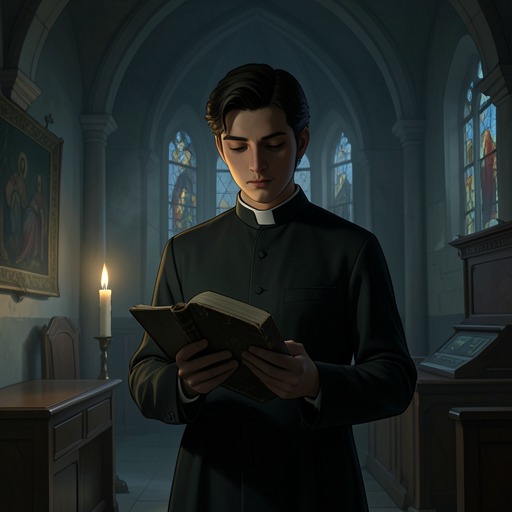
Years later, the chapel’s confessional encloses a very different kind of search. Candlelight flickers as Elizabeth and Mackie sit inches apart. Mackie says that he wants the truth recorded and witnessed before he dies, not absolution. He then confesses that he killed a man long ago, explaining that the man attacked him and that he acted in self-defence. The chapel provides a religious setting for the account, but Mackie does not present his purpose as seeking forgiveness; what he asks for is a listener who can bear witness.
That present confession also places the chapel beside another episode of concealment. In recounting the killing, Mackie describes driving through the convent grounds and onward to the Garden of Eternal Rest, where he secretly placed the dead man in a Sister’s grave. The route passes St Michael’s Chapel before continuing uphill. The chapel is therefore not the burial site, but it lies on the path to it, connecting the institution where Mackie once worked with the hidden act he has carried for a lifetime.
Maggie’s Death in the Chapel
In his account of the night he looked for Maggie, Mackie lights a candle in the chapel. At first its light reveals little beyond the altar and surrounding shadows. Then he sees Maggie hanging from a rope looped around a beam above the altar. He understands that she is dead and that this is why she did not come to him. The place he had associated with the possibility of checking on her instead becomes the scene where that hope ends.
Mackie cannot say exactly when Maggie died. He wonders whether it happened while he was tying his laces or after he had blown out a candle. That uncertainty remains inside the physical clarity of what he sees: the rope, the beam, and Maggie’s body above the altar. His recollection does not resolve the precise moment; it records the discovery and the knowledge it brings. The candlelight that had been meant to let him look becomes the means by which he recognizes her death.
Narrative Significance
The chapel holds distinct layers of memory without making them identical. Mackie’s earlier search brings him into its dim interior; his later confession brings him back to it as a place of testimony. Between those moments, the site is associated with his former work, his desire to make sure Maggie was all right, and the discovery that she had died. Its religious furnishings do not erase the events; the beam above the altar is at once part of the chapel’s structure and the object around which Mackie’s memory fixes.
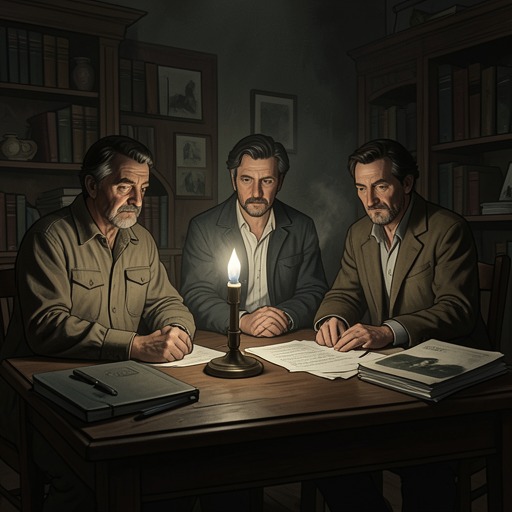
The scene of confession is also framed by other residents’ presence: Ron Ritchie pours whisky into Mackie’s mug, Donna De Freitas asks what he saw, and Joyce identifies the room where they are listening as a former dormitory. That room is not the chapel, but the recollection moves the group back toward the convent spaces in which the past unfolded. St Michael’s Chapel consequently functions not only as a setting for a remembered death but as a place where an account long held privately is finally spoken to others.